
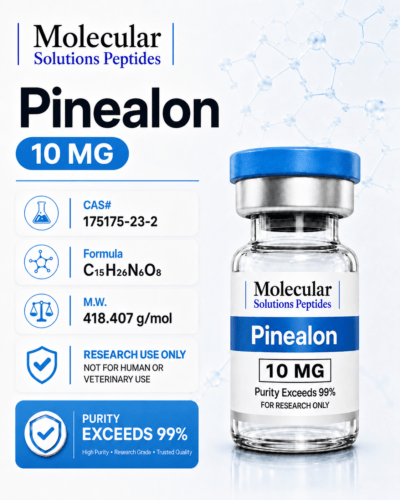
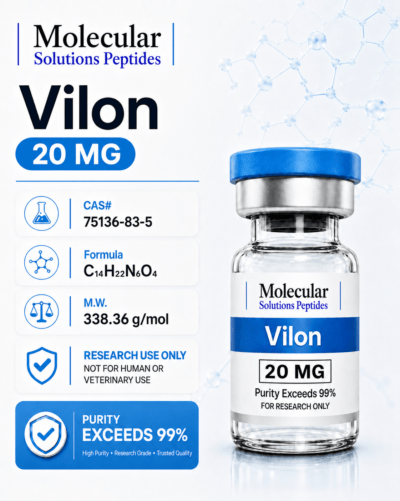

Research Use Only Access
High Quality Research Compounds
Molecular Solutions Peptides provides high quality peptides for scientific research and development that are pure, potent, stable, and safe, with identity confirmed through analytical methods and independent third-party laboratory testing.
Purest Research Peptides
Lab results posted for every batch, showing 99%+ purity with a goal of greater than 99.5%+.
Third-Party Tested
Samples from every batch are sent to testing labs for purity, quantification, sterility, and identity checks.
Fast Fulfillment
Most orders ship the same day when placed before the site cutoff, with dedicated account support.
Molecular Solutions Peptides
Research-use peptides with clarity and quality standards
Account access is required before viewing product information, cart, checkout, and ordering tools. Molecular Solutions products are for qualified research and laboratory use only.
Account access is required before viewing product information, cart, checkout, and ordering tools. Molecular Solutions products are for qualified research and laboratory use only.
Molecular Solutions Peptides
Research-use peptides with clarity and quality standards
Account access is required before viewing product information, cart, checkout, and ordering tools. Molecular Solutions products are for qualified research and laboratory use only.