
Thymosin Alpha-1
When you are sourcing a research peptide, the compound name alone tells you very little about the material you are actually receiving. Purity, identity, quantification, sterility testing, and supporting documentation all affect whether a material is suitable for controlled laboratory work. Thymosin Alpha 1 peptide is a synthetic 28-amino-acid peptide with a defined sequence, making accurate characterization and documented quality standards especially important when evaluating it as a research material.
Check out our Blog



Thymosin Alpha-1: Classification And Chemical Structure
Understanding how a peptide is classified helps you evaluate it as a research material. The term thymosin alpha 1 peptide refers to a defined 28-amino-acid sequence. For qualified research work, we focus on three aspects that help establish its chemical identity:
Molecular Classification
Thymosin Alpha-1 is a linear 28-amino-acid peptide with the sequence Ac-Ser-Asp-Ala-Ala-Val-Asp-Thr-Ser-Ser-Glu-Ile-Thr-Thr-Lys-Asp-Leu-Lys-Glu-Lys-Lys-Glu-Val-Val-Glu-Glu-Ala-Glu-Asn-OH. Its N-terminus is acetylated, a structural feature that should be reflected in sequence and mass confirmation data.
Molecular Formula And Weight
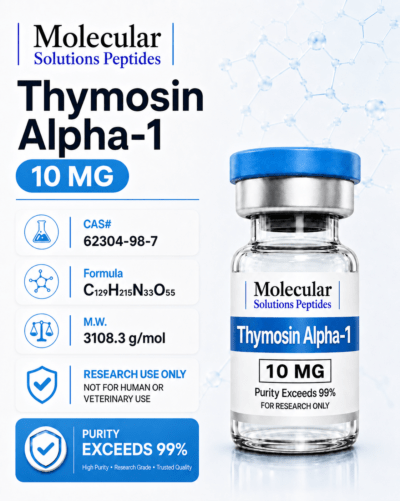
Thymosin Alpha-1 has a molecular formula of C129H215N33O55 and a molecular weight of approximately 3108.3 g/mol. Comparing observed mass spectrometry data against this theoretical value is a standard identity checkpoint on a batch-specific Certificate of Analysis.
Naming Consistency Across Research Sources
Peptide names can appear in different formats across databases, publications, and supplier records. Checking sequence information and standardized identifiers helps you confirm that sources refer to the same research compound. Thymosin Alpha-1 is registered under CAS number 62304-98-7, which provides a consistent reference point across sources.
Quality, Purity, And Documentation Standards For Thymosin Alpha 1 Peptide
Quality evaluation for a Thymosin Alpha 1 peptide research material depends on more than its labeled identity. You also need analytical information that supports purity, quantity, sterility, and compound verification. At Molecular Solutions Peptides, we use independent third-party testing and clear documentation to support these key quality checks:
Purity Standards
Purity data helps you assess the composition of a research material before laboratory use. We target 99%+ purity, with a goal above 99.5%, and rely on independent laboratory analysis to document whether each tested batch meets our stated quality expectations.
Identity And Quantification Verification
Identity testing helps confirm that the material corresponds to the specified peptide, while quantification evaluates the measured amount present in the sample. We include both within our third-party testing standards so you have clearer analytical information when reviewing research materials for controlled laboratory work.
Sterility And Batch Documentation
Sterility testing provides another documented quality parameter for research materials produced and handled in small batches. We keep testing information and batch records front-facing so you can review relevant documentation and make informed decisions about materials intended exclusively for qualified laboratory research.
Storage And Handling Considerations For Thymosin Alpha-1
Proper storage and recordkeeping help preserve the integrity of a research material between receipt and laboratory use. For Thymosin Alpha-1, we recommend focusing on three practical areas:
Lyophilized Storage Conditions
Thymosin Alpha-1 is supplied as a lyophilized powder. Sealed vials should be protected from light and moisture and stored at -20°C for long-term stability, in line with the product-specific documentation provided with each batch.
Receiving And Inspection
When a shipment arrives, verify the label, lot number, and packaging condition, and confirm that the batch-specific Certificate of Analysis matches the vial you received before adding the material to your laboratory inventory.
Lot-Specific Recordkeeping
Recording the lot number, receipt date, and storage conditions links each vial directly to its analytical documentation. For broader background, our guide to research peptides covers foundational standards and terminology relevant to laboratory research.
Choosing A Research-Grade Thymosin Alpha 1 Peptide
Evaluating a research peptide requires looking beyond the compound name. Molecular identity, analytical results, batch documentation, purity, quantification, and sterility data all provide context for determining whether a material aligns with your laboratory requirements. For qualified research customers seeking a dependable source, Molecular Solutions Peptides keeps these standards visible so you can assess both the material and the quality controls behind it.
We support that process through small-batch handling, transparent research-use-only policies, documented quality standards, and dependable domestic fulfillment. Our commitment is straightforward: provide research-grade materials supported by independent third-party testing, consistent quality controls, clear documentation, and customer-first service.
Disclaimer: All products sold by Molecular Solutions Peptides are intended strictly for laboratory research use only (RUO), not for human consumption, diagnostic use, or therapeutic use. These compounds have not been evaluated or approved by the FDA for any purpose. See our RUO Policy for full terms.
Frequently Asked Questions About Thymosin Alpha 1 Peptide
What factors can affect reproducibility in peptide research?
Reproducibility can be influenced by material consistency, lot variation, storage conditions, assay design, analytical methods, and experimental controls. When working with research-use-only peptide materials, documenting these variables helps you compare laboratory observations more accurately across experiments.
Who can purchase research materials from Molecular Solutions Peptides?
Our research materials are intended for qualified customers who are at least 21 years old and understand the hazards associated with handling research compounds. All products remain strictly designated for research and laboratory purposes.
What is the CAS number of Thymosin Alpha-1?
Thymosin Alpha-1 is registered under CAS number 62304-98-7. Using the CAS number alongside the compound name and sequence helps confirm that reference sources and laboratory records correspond to the same research-use-only material.
What should a batch-specific Certificate of Analysis include?
A Certificate of Analysis should list the lot number, test date, HPLC purity percentage, mass spectrometry identity confirmation comparing observed and theoretical mass, quantification results, and the testing laboratory. Matching this information to your vial label supports traceability throughout your research records.
Should researchers record lot information during laboratory studies?
Yes. Recording lot-specific information can strengthen traceability when a research-use-only material is incorporated into laboratory documentation. Maintaining these records can also help your team distinguish materials used across separate experiments, study periods, or analytical workflows.
Why are experimental controls important when studying peptide materials?
Controls provide a reference point for interpreting observations generated under defined laboratory conditions. When working with research-use-only peptide materials, appropriate controls help you separate experimental variables from background effects and support clearer analysis of study results.
What does lyophilized mean when referring to Thymosin Alpha-1?
Lyophilization is a freeze-drying process that removes moisture from a material. For research-use-only peptides, the resulting material is supplied in a dry form intended for controlled laboratory handling and storage.