
Key Takeaways:
- Structural Classification: Tesofensine is a synthetic small-molecule research compound, structurally distinct from amino acid–based peptides.
- Research Purity: High-quality tesofensine capsules are essential for reliable results, as each batch undergoes stringent assessments to ensure accurate composition, purity, and consistency for laboratory research use.
- Sourcing Standards: Reliable tesofensine sourcing depends on verified analytical testing, batch-specific documentation, and proper storage and handling guidance.
As interest in research-use-only small-molecule compounds continues to expand, researchers sourcing tesofensine need clear information on its classification, purity verification, and documentation standards before incorporating it into a laboratory protocol. Interest in tesofensine also appears alongside broader investigations involving research compounds and peptide-based materials. For additional context on this research category, researchers can review What Are Research Peptides.
At Molecular Solutions Peptides, we supply tesofensine exclusively for laboratory research use and prioritize analytical transparency, product consistency, and clear batch documentation. Our tesofensine products are supported by available analytical data, including HPLC and Mass Spectrometry documentation where applicable, helping researchers evaluate product identity and composition before use in controlled laboratory studies.
In this article, we walk through tesofensine’s structural classification, how purity and quality control are verified, and what to look for when sourcing it as a research-use-only material for your laboratory.
What Is Tesofensine?
Tesofensine is a synthetic small-molecule research compound, structurally distinct from amino acid–based peptides. It is supplied strictly as a research-use-only (RUO) reference material for laboratories that require consistent, well-documented sourcing.
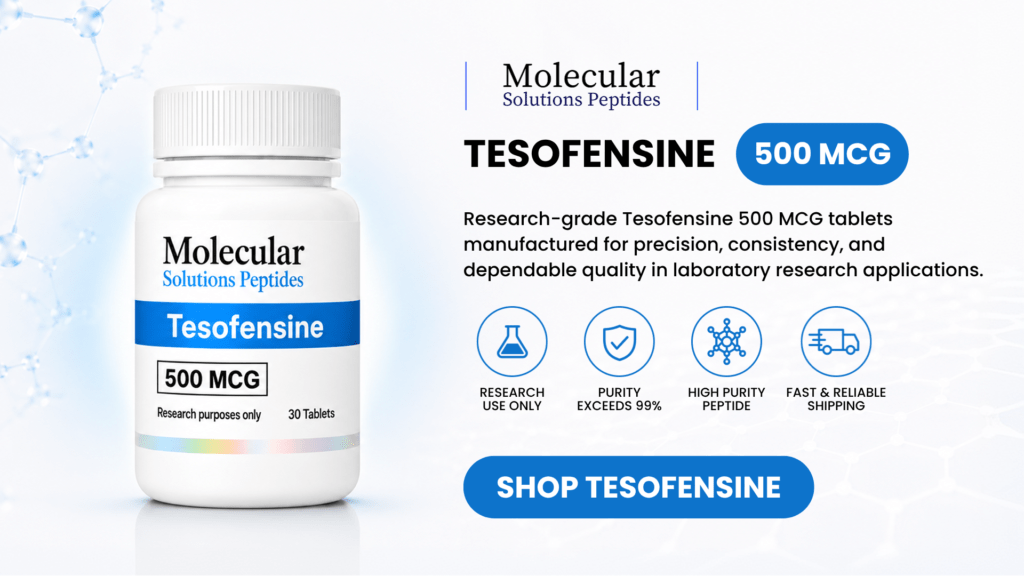
Our catalog at Molecular Solutions Peptides offers tesofensine capsules exclusively for research and laboratory use, providing a standardized format for precise experimental design. Maintaining consistent documentation and rigorous analytical standards helps ensure your laboratory’s records accurately reflect the material on hand.
All products listed on Molecular Solutions Peptides are sold exclusively for research and laboratory use. Products are not intended for human consumption or for use as cosmetics, food additives, chemicals, drugs, or any application outside stated research use.
How Tesofensine Purity Is Verified
Reliable sourcing depends on rigorous standards for compound synthesis, testing, and documentation. At Molecular Solutions Peptides, we apply the following protocols to every batch of tesofensine capsules:
Analytical Testing And Purity Verification
We use high-performance liquid chromatography and mass spectrometry to confirm the identity of tesofensine and consistently achieve purity levels appropriate for demanding laboratory research. Comprehensive profiling is provided for each lot to support transparency and reproducible documentation.
All products listed on Molecular Solutions Peptides are sold exclusively for research and laboratory use.
Controlled Manufacturing And Batch Documentation
Each step of our synthesis process adheres to rigorous process controls, with complete documentation and batch records available for audit. Certificates of analysis accompany every tesofensine capsule lot, supporting full traceability for your research records.
Products are not intended for human consumption or for use as cosmetics, food additives, chemicals, drugs, or any application outside stated research use.
Storage, Handling, And Stability Assurance
We recommend proper storage and handling protocols to support tesofensine capsule stability from our site to your lab. Retaining samples and trending analyses over time can further support your laboratory’s ongoing quality-assurance practices.
All products are strictly for research and laboratory use only.
What To Look For When Sourcing Tesofensine
Not all RUO suppliers hold themselves to the same standard, so it helps to know what to check before ordering. Key sourcing considerations include:
Purity Specifications And Test Methods
Confirm that your supplier states a specific purity threshold and discloses which analytical methods — typically HPLC and mass spectrometry — were used to verify it.
All products listed on Molecular Solutions Peptides are sold exclusively for research and laboratory use. Products are not intended for human consumption or for use as cosmetics, food additives, chemicals, drugs, or any application outside stated research use.
Batch-Specific Documentation
Look for suppliers who provide a Certificate of Analysis tied to the specific lot you’re purchasing, along with a Safety Data Sheet, rather than a generic or outdated document. This matters for reproducibility and for satisfying institutional audit requirements.
Storage And Shipping Practices
Verify that your supplier ships with appropriate handling to preserve compound stability, and that clear storage guidance accompanies your order. All products listed on Molecular Solutions Peptides are sold exclusively for research and laboratory use, and are not intended for human consumption.
Final Thoughts
Understanding tesofensine’s structural classification and sourcing requirements provides necessary context for evaluating suppliers and maintaining accurate laboratory documentation. Reliable, reproducible research depends on material consistency from batch to batch.
Holding every batch to rigorous quality control and high-purity standards ensures experimental accuracy and reproducibility. Molecular Solutions Peptides provides the independent testing data, documentation support, and secure fulfillment required by professional laboratories. All products are sold exclusively for research and laboratory use, and are not intended for human consumption.
Disclaimer: All products sold by Molecular Solutions Peptides are intended strictly for laboratory research use only (RUO), not for human consumption, diagnostic use, or therapeutic use. These compounds have not been evaluated or approved by the FDA for any purpose. See our RUO Policy for full terms.
