
VIP Peptide
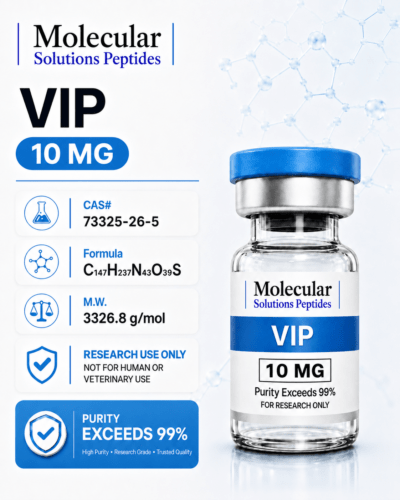
VIP Peptide is a research compound studied in laboratory settings, where verified identity, purity, and batch consistency matter when evaluating material quality. At Molecular Solutions Peptides, we work in small batches and use independent third-party testing for purity, quantification, sterility, and identity, with a 99%+ purity target, a goal of 99.5%+, same-day shipping on most orders placed before the site cutoff, customer-first service, and clear RUO policy transparency. In this article, we walk through what VIP Peptide is, how it is examined in research contexts, and what researchers should consider when evaluating VIP 10mg for laboratory use.
Check out our Blog



What Is VIP Peptide And Why Is It Studied In Research?
VIP Peptide is a research compound supplied for in-vitro laboratory study. Researchers working with peptide VIP depend on confirmed identity, documented analytical results, and a clear experimental design. Work with this compound generally centers on three areas:
Sequence And Classification
VIP is classified as a peptide, and its amino acid sequence defines its identity as a research compound. Researchers should confirm the stated sequence against analytical documentation before starting experimental work..
Analytical Verification
Analytical methods such as High-Performance Liquid Chromatography (HPLC) and Mass Spectrometry help verify the purity and identity of VIP before it enters a laboratory workflow. Reviewing these results gives researchers a documented baseline for each batch.
Experimental Model Design
Researchers studying VIP may select cell-based, biochemical, or other models according to the specific endpoint being measured. Clear compound identity and consistent research materials help reduce avoidable variability when comparing results across assays or experimental runs.
What Should Researchers Know About VIP Peptide 10mg?
VIP peptide 10mg is a research-use-only presentation intended for controlled laboratory investigation. When evaluating this format, researchers should look beyond the labeled amount and consider material identity, analytical documentation, and consistency between batches. We focus on three practical factors that help you assess research materials with greater confidence:
Material Identity
Confirming that a research compound matches its stated identity is fundamental to experimental reliability. Our testing approach includes independent identity verification so researchers can evaluate the material against documented analytical results before incorporating it into laboratory workflows.
Batch Documentation
Batch-specific information helps you assess whether a research material meets defined quality expectations. When reviewing Research Peptides, you should consider available purity, quantification, sterility, and identity data.
Research-Use Scope
VIP materials should remain within clearly defined laboratory and research contexts. Our product policies keep that limitation visible so qualified researchers understand the intended scope before purchasing or handling the compound.
All products listed on Molecular Solutions Peptides are sold exclusively for research and laboratory use. Products are not intended for human consumption or for use as cosmetics, food additives, chemicals, drugs, or any application outside stated research use.
How Should Researchers Evaluate VIP 10mg For Laboratory Use?
Researchers evaluating VIP 10mg for laboratory use should review the quality controls, testing scope, and supplier transparency behind the material before adding it to a research workflow. We recommend focusing on three core areas:
Independent Third-Party Testing
Independent testing gives you documented evidence beyond a supplier’s internal claims. We send batches for third-party analysis covering purity, quantification, sterility, and identity so researchers can assess material quality against defined analytical criteria.
Purity And Batch Consistency
Purity targets matter because unwanted variability can complicate controlled research. Our peptides are produced in small batches with a 99%+ purity target and a goal of greater than 99.5%, helping us maintain a consistent quality standard across research materials.
Supplier Transparency
Clear policies make it easier to understand what a supplier provides and how materials are intended to be used. Our RUO Policy keeps research-use limitations visible alongside our testing and fulfillment standards.
All products listed on Molecular Solutions Peptides are sold exclusively for research and laboratory use. Products are not intended for human consumption or for use as cosmetics, food additives, chemicals, drugs, or any application outside stated research use.
Why Source VIP Peptide From Molecular Solutions Peptides?
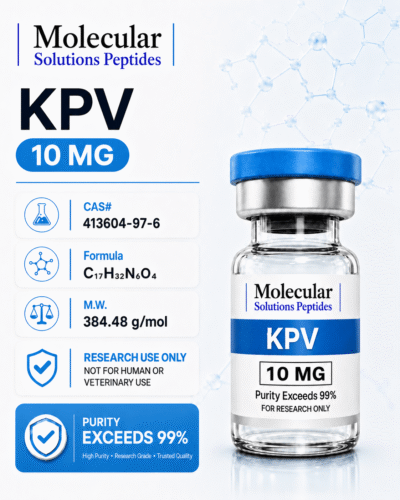
VIP Peptide research depends on more than the compound name alone. Reliable laboratory work starts with clear product identity, documented quality controls, consistent batch standards, and transparent research-use policies. These same principles apply when evaluating related materials such as KPV Peptide and other research-use-only compounds.
At Molecular Solutions Peptides, we aim to give qualified research customers a dependable source backed by small-batch production, independent third-party testing, domestic fulfillment, and clear policies. Our customer-first approach is built around providing accurate information and research-grade materials you can evaluate with confidence. We remain committed to research-grade quality, independent testing, and straightforward service at every step.
All products listed on Molecular Solutions Peptides are sold exclusively for research and laboratory use. Products are not intended for human consumption or for use as cosmetics, food additives, chemicals, drugs, or any application outside stated research use.
Disclaimer: All products sold by Molecular Solutions Peptides are intended strictly for laboratory research use only (RUO), not for human consumption, diagnostic use, or therapeutic use. These compounds have not been evaluated or approved by the FDA for any purpose. See our RUO Policy for full terms.
Frequently Asked Questions About VIP Peptide
How should VIP Peptide be stored for research purposes?
VIP Peptide should be stored according to the supplier’s documented research handling requirements. Qualified researchers should review product-specific storage information and maintain controlled laboratory conditions to help preserve material integrity throughout the research period.
What documentation should accompany VIP Peptide research material?
Research-use-only VIP Peptide should be supported by clear product identification and relevant analytical documentation. Researchers may review available third-party test results, batch information, and supplier policies before incorporating the material into a laboratory workflow.
Can VIP Peptide be compared with other research peptides?
Yes. Researchers may compare VIP Peptide with other research-use-only materials when experimental design calls for differences in structure, receptor interaction, or laboratory response to be examined. Comparisons should be based on defined research objectives and controlled conditions.
Does peptide sequence matter when studying VIP Peptide?
Yes. Peptide sequence is a fundamental part of compound identity and can affect how a material is investigated in research contexts. Researchers should confirm that the stated sequence and identity correspond with the compound required for their experimental design.
Why is sterility testing relevant for VIP Peptide research materials?
Sterility testing provides an additional quality-control data point for research materials. Depending on the laboratory model and experimental requirements, documented sterility results can help researchers evaluate whether a batch meets their established research criteria.
Can VIP Peptide be included in multi-compound laboratory studies?
VIP Peptide may be investigated alongside other research-use-only compounds when supported by an appropriate experimental protocol. Researchers should account for compound identity, analytical controls, study design, and potential variables before interpreting results from multi-compound research.
Where can researchers learn more about related peptide quality standards?
Researchers reviewing peptide sourcing standards may also reference our KPV Peptide: Research-Grade Purity resource for additional discussion of research-grade quality considerations and analytical transparency.