
LL-37 Peptide
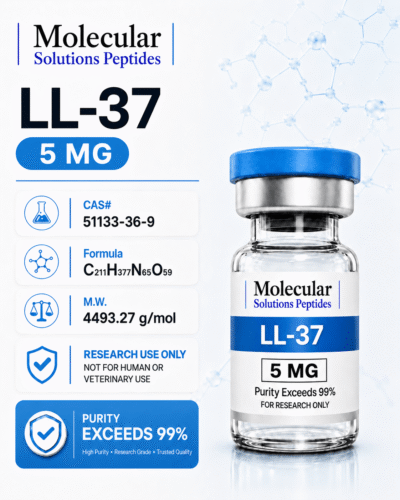
LL-37 Peptide is studied in laboratory research contexts where material identity, purity, and batch consistency can directly affect the reliability of experimental work. We approach LL-37 the same way we approach every research compound in our catalog: with documented sourcing standards, independent analytical verification, clear batch information, and RUO policies that keep research expectations transparent from the start. In this article, we walk through what LL-37 is, how researchers evaluate its quality, what to know about specific research formats, and what to look for when sourcing it for laboratory use.
Check out our Blog



What Is LL-37 And Why Is It Studied In Research?
LL-37 is a 37-amino-acid peptide derived from the cathelicidin precursor hCAP18. It is studied in laboratory settings because its defined sequence, length, and charge make it a useful subject for controlled biochemical investigations.
At Molecular Solutions Peptides, we frame LL-37 strictly as a research-use-only material alongside our broader catalog of Research Peptides for qualified laboratory work. All products listed on Molecular Solutions Peptides are sold exclusively for research and laboratory use. Products are not intended for human consumption or for use as cosmetics, food additives, chemicals, drugs, or any application outside stated research use.
How Is LL37 Evaluated For Research Quality And Identity?
Evaluating LL37 for research starts with confirming that the material matches its stated identity and specifications. For qualified researchers, that review covers purity, quantification, sterility, and batch-level documentation. We look at these factors together when assessing whether a research material is suitable for controlled laboratory work:
Identity Verification
Identity testing helps confirm that the peptide being examined corresponds to the expected compound. In research contexts, this matters because a mislabeled or incorrectly characterized material can compromise downstream interpretation even when other quality metrics appear acceptable.
Purity And Quantification
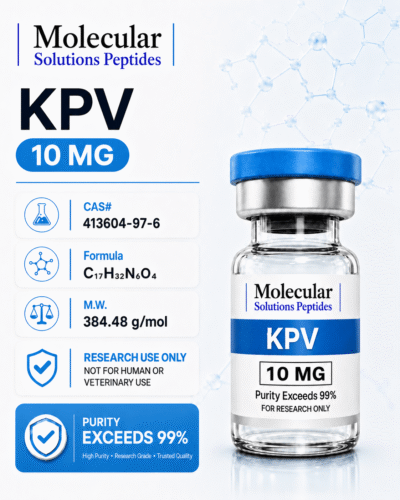
Purity testing measures the proportion of the intended peptide relative to detectable impurities, while quantification helps establish how much target material is actually present. Our discussion of KPV Peptide: Research-Grade Purity provides additional context on why these analytical measures should be evaluated separately in research materials.
Sterility And Batch Documentation
Sterility testing and clear batch records help researchers evaluate handling quality and traceability. We prioritize documentation that allows researchers to review testing results at the batch level.
What Should Researchers Know About LL-37 5mg Research Material?
LL-37 5mg identifies a research material by its stated peptide quantity and should be evaluated within the context of laboratory sourcing and documentation. When you assess this research material, we recommend looking beyond the label to the supporting quality controls:
Stated Quantity And Research Context
The 5mg designation identifies the labeled amount of peptide material provided for laboratory research. It should not be interpreted as a measure of purity or analytical quality, which require separate verification through appropriate testing and documentation. The same distinction between labeled quantity and analytical quality applies when evaluating other research materials, including KPV Peptide, within controlled laboratory settings.
Batch-Specific Testing
You should review batch-level results. Independent testing for purity, quantification, sterility, and identity provides a clearer basis for evaluating whether the material aligns with your laboratory requirements.
Research-Use-Only Status
We supply LL-37 strictly as research-use-only material for qualified laboratory work. All products listed on Molecular Solutions Peptides are sold exclusively for research and laboratory use. Products are not intended for human consumption or for use as cosmetics, food additives, chemicals, drugs, or any application outside stated research use.
What Should You Look For When Sourcing LL-37 Peptide?
When sourcing LL-37 Peptide for laboratory research, the most useful indicators are clear identity data, batch-specific testing, documented purity and quantification, sterility verification, and transparent research-use policies. You should be able to see how the material was evaluated and what quality controls support the label. For broader questions about ordering, laboratory research policies, and product handling expectations, our Research Use FAQ provides additional guidance for qualified research customers.
At Molecular Solutions Peptides, we aim to make that evaluation straightforward for qualified research customers by pairing small-batch handling with independent third-party testing and clear product documentation. Our customer-first support team is available to help with order questions, documentation, and support needs.
All products listed on Molecular Solutions Peptides are sold exclusively for research and laboratory use. Products are not intended for human consumption or for use as cosmetics, food additives, chemicals, drugs, or any application outside stated research use.
Disclaimer: All products sold by Molecular Solutions Peptides are intended strictly for laboratory research use only (RUO), not for human consumption, diagnostic use, or therapeutic use. These compounds have not been evaluated or approved by the FDA for any purpose. See our RUO Policy for full terms.
Frequently Asked Questions About LL-37 Peptide
How should LL-37 Peptide research material be stored in a laboratory?
Research-use-only peptide materials should be stored according to the supplier’s documented laboratory storage specifications. Researchers should minimize unnecessary environmental exposure and maintain consistent storage records to support material integrity across the planned research period.
Why does peptide sequence information matter in laboratory research?
Sequence information helps researchers confirm the molecular composition expected for a research-use-only peptide. Reviewing the documented sequence can also support experimental planning, literature comparison, and interpretation of analytical data within controlled research contexts.
What documentation should researchers retain for peptide research materials?
Researchers should retain relevant batch records, certificates of analysis, supplier documentation, storage records, and experimental identifiers. Maintaining this information supports traceability and makes it easier to connect research observations with the specific research-use-only material evaluated.
Can this peptide be included in comparative laboratory studies?
Research-use-only peptide materials may be examined within comparative laboratory designs when the experimental protocol supports that approach. Researchers should define appropriate controls, analytical methods, and comparison criteria before evaluating differences between materials or experimental conditions.
Why are experimental controls important when studying research peptides?
Controls provide a reference point for interpreting observations made during laboratory research. Well-defined positive or negative controls, where appropriate to the research design, can help researchers distinguish experimental signals from background variation or procedural effects.
What should researchers review before designing a peptide study?
Researchers should review relevant peer-reviewed literature, validated analytical methods, compound documentation, and the limitations of existing research. This helps establish a research question grounded in available evidence without extending findings beyond what the experimental data support.
Why is supplier transparency important for research-use-only peptides?
Transparent suppliers make key information about testing standards, research-use policies, fulfillment practices, and product documentation accessible. At Molecular Solutions Peptides, we believe this gives qualified research customers a clearer basis for evaluating whether research materials align with their laboratory requirements.