
Ipamorelin
Research-grade peptide sourcing depends on more than a product name on a vial. For compounds such as Ipamorelin, researchers need clear information about identity, purity, analytical testing, and how the material is represented before it enters a laboratory workflow. Ipamorelin is a synthetic pentapeptide with a defined amino acid sequence, making accurate classification, identity verification, and transparent sourcing important considerations for research use.
Tesamorelin/Ipamorelin Blend (11mg/6mg) 5-Pack
Tesamorelin/Ipamorelin Blend (11mg/6mg)
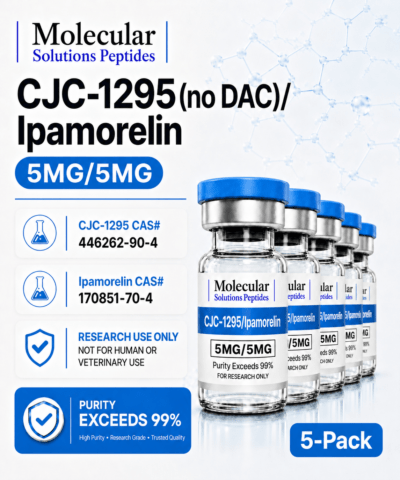
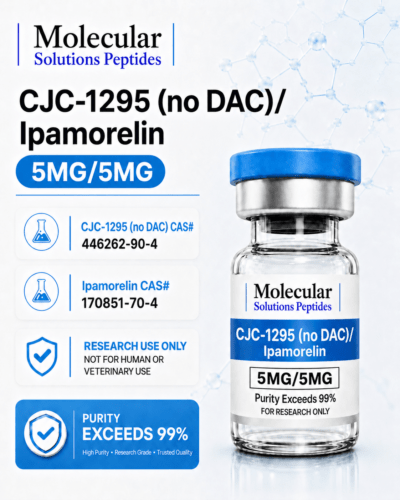
CJC-1295 (no DAC)/Ipamorelin Blend (5mg/5mg) 5-Pack
Check out our Blog


Ipamorelin Peptide: Classification And Chemical Structure
Ipamorelin is a synthetic pentapeptide with the sequence Aib-His-D-2-Nal-D-Phe-Lys-NH2. Its structure includes a non-proteinogenic residue (Aib, α-aminoisobutyric acid), two D-configured residues, and a C-terminal amide. These features distinguish it from peptides built solely from naturally occurring L-amino acids.
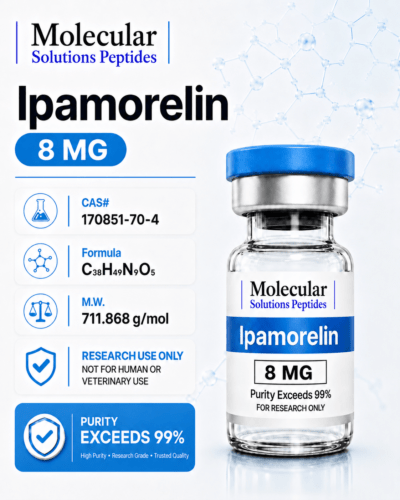
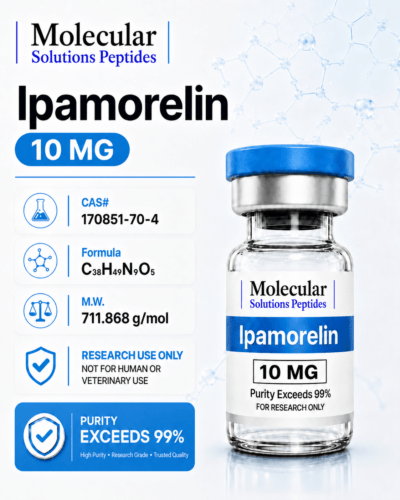
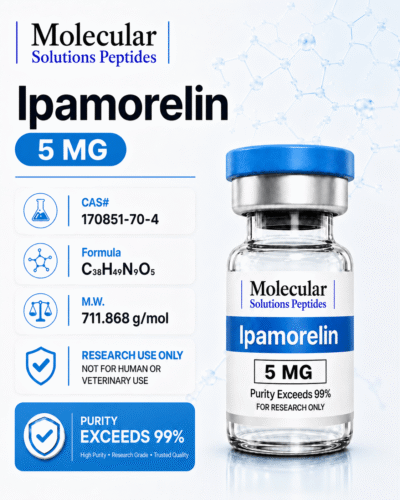
Ipamorelin has a molecular formula of C38H49N9O5 and a molecular weight of approximately 711.9 g/mol. Within the broader category of research peptides, it is identified and verified through these defined structural properties.
For researchers reviewing Ipamorelin, this classification provides a clear basis for identity confirmation by mass spectrometry and purity assessment by HPLC. The compound should be evaluated through its documented identity, chemical classification, and available analytical data within research-use-only parameters.
What Researchers Should Look For When Evaluating Ipamorelin Quality
Evaluating Ipamorelin for laboratory research requires more than checking a stated purity percentage. You also need evidence that the material has been assessed for identity, quantity, and batch consistency. At Molecular Solutions Peptides, we focus on three areas when reviewing research-grade material:
Independent Third-Party Testing
We send every batch to independent laboratories for purity, quantification, sterility, and identity testing. This provides researchers with analytical information that can be reviewed independently of the supplier’s own quality claims.
Verified Purity Standards
Purity indicates how much of a tested sample corresponds to the intended compound relative to detected impurities. We target 99%+ purity, with a goal above 99.5%, and use batch-specific testing to support that standard.
Batch Consistency And Documentation
Research reliability depends on knowing what material you are working with from one batch to the next. Small-batch production and documented analytical results help you evaluate consistency before incorporating Ipamorelin into defined research contexts.
Research-Use-Only Sourcing And Handling Considerations For Ipamorelin
Sourcing Ipamorelin for laboratory research requires attention to supplier standards, documentation, and research-use restrictions. You should be able to verify how the material is represented, tested, and supported before adding it to your research inventory. We keep these considerations visible so researchers can make informed sourcing decisions:
Confirm Research-Use-Only Policies
A supplier should clearly define how its research materials may be purchased and used. Our policies specify that our compounds are intended exclusively for qualified laboratory and research settings, with customers required to understand the responsibilities associated with handling research materials.
Review Supplier Transparency
Clear sourcing information should extend beyond the product listing. We provide visible testing standards, store policies, and fulfillment information so you can review how we approach quality control and research-use compliance before placing an order.
Evaluate Fulfillment And Documentation
Reliable domestic fulfillment helps researchers plan laboratory procurement with fewer uncertainties. We pair our small-batch approach with documented quality standards and clear fulfillment policies, giving you practical information to consider when sourcing Ipamorelin for laboratory research.
Why Source Ipamorelin From Molecular Solutions Peptides?
Choosing Ipamorelin for laboratory research means evaluating both the material and the standards behind its sourcing. Clear analytical documentation, defined research-use policies, consistent quality controls, and dependable fulfillment all help you assess whether a supplier fits your laboratory requirements. At Molecular Solutions Peptides, we keep those standards visible so qualified research customers can make informed purchasing decisions.
Our small-batch approach, independent third-party testing, 99%+ purity target, and domestic fulfillment reflect the way we approach research materials across our catalog. We also place customer service at the center of that process, providing clear policies and responsive support when questions arise. We remain committed to research-grade quality, independent testing, and customer-first service at every stage.
Disclaimer: All products sold by Molecular Solutions Peptides are intended strictly for laboratory research use only (RUO), not for human consumption, diagnostic use, or therapeutic use. These compounds have not been evaluated or approved by the FDA for any purpose. See our RUO Policy for full terms.
Frequently Asked Questions About Ipamorelin
How should Ipamorelin research material be stored?
Lyophilized Ipamorelin should be kept sealed in its original vial, protected from light and moisture, and stored at -20°C for long-term stability. Researchers should follow the product-specific documentation provided with each batch and record storage conditions as part of standard laboratory procedures.
What is the chemical structure of Ipamorelin?
Ipamorelin is a synthetic pentapeptide with the sequence Aib-His-D-2-Nal-D-Phe-Lys-NH2, a molecular formula of C38H49N9O5, and a molecular weight of approximately 711.9 g/mol. These identifiers are used to confirm material identity on a batch-specific Certificate of Analysis.
What does lyophilized mean when referring to Ipamorelin?
Lyophilization is a laboratory processing method used to remove moisture from a material through freeze-drying. For research-use-only peptides, the resulting material is typically supplied in a dry form intended for controlled laboratory handling and investigation.
What analytical methods may be used when evaluating peptide research materials?
Depending on the laboratory and testing objective, analytical methods may include techniques such as high-performance liquid chromatography and mass spectrometry. Researchers should review the specific methods reported with the research-use-only material rather than assuming all analyses use identical procedures.
What should a batch-specific Certificate of Analysis include?
A Certificate of Analysis should list the lot number, test date, HPLC purity percentage, mass spectrometry identity confirmation comparing observed and theoretical mass, quantification results, and the testing laboratory. Matching this information to the label on your vial supports traceability throughout your research records.
What should researchers do if product documentation does not match the material received?
If identifying information, batch details, or supporting documentation appear inconsistent, researchers should pause laboratory use and contact the supplier for clarification. Clear traceability is important when working with research-use-only materials.
Can Ipamorelin research material be treated as a certified reference standard?
Not automatically. A research-use-only product and a certified reference material serve different analytical purposes. Researchers requiring a certified reference standard should verify that the material carries the appropriate certification and documentation for that specific laboratory application.