
CJC-1295/Ipamorelin Blend
Research-grade peptide sourcing depends on more than a product name or stated purity percentage. For a blend such as CJC-1295 Ipamorelin, researchers need clear information about compound identity, batch consistency, independent analytical testing, and research-use documentation before evaluating whether a material fits their laboratory requirements. The blend combines CJC-1295 without DAC and Ipamorelin in a single research formulation, making accurate classification and transparent documentation especially important.
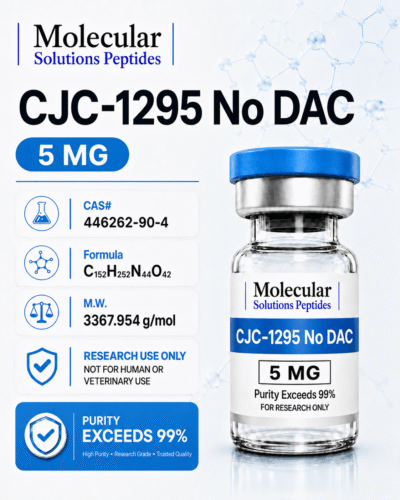
CJC-1295 No DAC (Mod GRF 1-29) (5mg)
Check out our Blog



What Is The CJC-1295 Ipamorelin Blend?
CJC-1295 Ipamorelin is a research-use-only peptide blend that combines two distinct synthetic peptides, CJC-1295 (without DAC) and Ipamorelin, within a single laboratory research material. Each component has its own defined amino acid sequence, molecular formula, and analytical identifiers.
Because the blend contains two separate peptide components, researchers may need to distinguish the identity and classification of each compound when reviewing analytical documentation or planning controlled laboratory work. The component structures below provide reference data for evaluating those distinctions.
CJC-1295 Ipamorelin Blend: Component Structures
Because the blend contains two distinct peptides, each component has its own sequence, molecular formula, and analytical identifiers. Three areas are central to characterizing the material:
CJC-1295 (No DAC)
CJC-1295 without DAC is a synthetic 29-amino-acid peptide amide with the sequence Tyr-D-Ala-Asp-Ala-Ile-Phe-Thr-Gln-Ser-Tyr-Arg-Lys-Val-Leu-Ala-Gln-Leu-Ser-Ala-Arg-Lys-Leu-Leu-Gln-Asp-Ile-Leu-Ser-Arg-NH2. It has a molecular formula of C152H252N44O42 and a molecular weight of approximately 3367.9 g/mol.
Ipamorelin
Ipamorelin is a synthetic pentapeptide with the sequence Aib-His-D-2-Nal-D-Phe-Lys-NH2. It has a molecular formula of C38H49N9O5 and a molecular weight of approximately 711.9 g/mol.
Analytical Documentation For A Blend
For a two-component material, analytical records should confirm the identity of each peptide separately by mass spectrometry and report purity and quantification for each component by HPLC. We prioritize third-party testing documentation so researchers can verify that the batch matches its stated composition.
What To Look For When Sourcing A CJC-1295 Ipamorelin Blend For Research
Sourcing research-use-only peptide blends requires attention to the documentation and quality controls behind the material, not just the product label. You should be able to verify what was tested, how the batch was evaluated, and whether the supplier clearly defines its research-use policies. We focus on three practical areas when supporting qualified research customers:
Independent Third-Party Testing
Independent testing gives you batch-specific information beyond an internal product specification. We send samples from our batches to third-party laboratories for purity, quantification, sterility, and identity analysis so researchers can review documented quality characteristics before incorporating materials into laboratory research.
Batch Quality And Consistency
Small-batch production allows us to maintain closer oversight of individual research materials. We target 99% or greater purity, with a goal above 99.5%, while keeping batch documentation available so you can assess the material against the requirements of your research setting.
Clear RUO Policies And Fulfillment
Research suppliers should state product restrictions and store policies clearly. We maintain visible research-use-only terms, domestic fulfillment information, and customer support resources so you can confirm purchasing requirements and handling expectations before ordering research materials.
A Research-Grade Standard For CJC-1295 Ipamorelin
For qualified research customers, evaluating CJC-1295 Ipamorelin means looking beyond the blend name and reviewing the quality systems behind the material. Clear compound identification, independent analytical testing, batch-level documentation, and transparent research-use policies all help you assess whether a peptide blend meets the standards required for controlled laboratory work.
At Molecular Solutions Peptides, we support that process by keeping our quality controls, RUO policies, and customer service standards visible and straightforward. Our goal is to give researchers a dependable source for research-use-only materials backed by precise documentation and accountable fulfillment. We remain committed to research-grade quality, independent testing, and customer-first service at every stage of the sourcing process.
Disclaimer: All products sold by Molecular Solutions Peptides are intended strictly for laboratory research use only (RUO), not for human consumption, diagnostic use, or therapeutic use. These compounds have not been evaluated or approved by the FDA for any purpose. See our RUO Policy for full terms.
Frequently Asked Questions About CJC-1295 ipamorelin
What does no DAC mean in CJC-1295 research documentation?
No DAC identifies a specific form of CJC-1295 used in research-use-only materials. Researchers should verify this designation in the product documentation because different CJC-1295 forms may have different structural and analytical characteristics.
Can CJC-1295 Ipamorelin be evaluated as a single blended research material?
Yes. A blended research-use-only material can be evaluated as a combined preparation, provided the documentation clearly identifies both peptide components and the analytical methods used to characterize the batch.
Why should researchers review the stated composition of a peptide blend?
The stated composition helps you confirm which compounds are included in the research-use-only material and whether the blend matches the requirements of your laboratory protocol. Clear composition details also support accurate recordkeeping.
Are blended peptide materials tested differently from individual compounds?
Testing requirements can vary depending on the material and laboratory method. For research-use-only blends, analytical review may need to account for multiple identified components rather than a single peptide compound.
What role does quantification testing play in peptide blend documentation?
Quantification testing provides information about the measured amount of identified material within a research sample. For blended research-use-only compounds, this can help researchers evaluate whether the documented composition aligns with the stated product specifications.
Why is lot identification important for research peptide records?
Lot identification connects a specific research-use-only material to its corresponding analytical documentation. Maintaining that link supports traceability when researchers review testing records, laboratory notes, and sourcing information.
Where should researchers verify restrictions for CJC-1295 Ipamorelin materials?
Researchers should review the supplier’s research-use-only policy, product labeling, and applicable store terms before ordering. These materials should remain clearly restricted to laboratory and research applications throughout the purchasing and documentation process.